I am currently a full-time student at USF, Tampa. I am currently studying Psychology. I hope to own my own zoo and research center one day to connect people to nature and the animals found within. I am hoping this blog is another source for the Tech for Leading and Learning class I am currently taking this summer. I also hope this blog allows me to get to know my classmates better.
Before I started this week’s group project, I was not
familiar with the term Internet of Things (IoT). I was using IoT every day but
was completely unaware of its existence. I am an online student and I will
continue to use the Internet of Things on my desktop computer, my tablet, and even
my phone. I am certain when I open my zoo one day that I will incorporate the
Internet of Things as an educational asset through the zoo. I want to give
people the opportunity to not only learn by what animals they are seeing but I
would also like to have computers available connected to the Internet so they
can log into the zoo database to learn even more.
Based on the theory of Diffusion of Innovation and how this
theory relates to the Internet of Things I would have to say that the two are
interrelated or possibly the two compliment one another. The Diffusion of
Innovation theory looks at how products are accepted by their intended recipients
and the IoT is the conduit of the new technology connected to the Internet. New
products seem to be born constantly in today’s marketplace and with that birth
the IoT grows simultaneously.
I consider myself somewhere between the early adopter and
the early majority. I am not first in line to purchase new technology but I am
also not one to fight technology change. I am also open to new technology and
how I can use it for research with school and my zoo as well as for personal
use. I do however prefer to read reviews and to ask others about the success or
failure of new technology before I jump in to use it. In school with my educational
accommodations I was able to try technologies to help me achieve academic success.
Some technologies that worked for other students did not work well for me and
vice versa.
Coming up next is the Hierarchy of Needs in a pyramid.
Maslow’s hierarchy of needs as presented in module 2 of Tech
for Leading and Learning is a motivational theory in psychology. The hierarchy
is shown in a pyramid consisting of 5 levels of human needs in a ranking
hierarchial order.
Physiological needs are the biological requirements for
human survival, like air, food, shelter, and water.
Safety needs are about keeping us safe from harm like
getting help from the police.
Love and belongingness needs are about feeing love and
belonging with friends and family.
Esteem needs refers to the desire for self-confidence.
Self-actualization needs refers to realizing personal potential and self-fulfillment.
This is my second blog post for the whiteboard assignment. My desktop computer does not have a microphone. I was able to use a headset with a microphone but after several attempts I could hear the mic turn on and I could see that my voiceover was recorded but I could not hear it. After sleeping for a few hours I tried again and today I was finally successful. I have still included my written transcript with this blog post for consistency. I hope you enjoy the whiteboard presentation on Maslow’s Hierarchy of Needs.
Gordon Moore was an engineer and one of the founders of the technology company named Intel. He is the creator of Moore’s Law. Moore’s Law in its simplest form is that technology and its components double every two years.
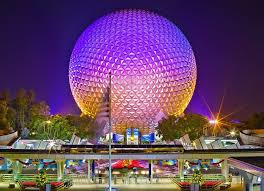
Richard Buckminster Fuller was an architect and inventor. He is credited with the creation of the knowledge doubling curve and the geodesic dome. If you have ever had the chance to go to Disney’s Epcot and saw the silver dome-like structure at the front of the park then you have seen a geodesic dome. The knowledge doubling curve originally looked at knowledge and how quickly the data was doubling. From 1800 to 1900 the doubling curve took 100 years and then after World War II the doubling was happening in approximately 25 years. Current day the information is doubling constantly.
Ray Kurzweil is an inventor and a futurist. He best known creation is the text-to-talk feature for computers and smart phones. This creation takes our voice and turns it into text. I am not a quick typist so I use software that allows me to speak into my computer and my phone and my spoken words turn into written words. This has allowed me to be even more successful in my studies. He is also credited with the Law of Accelerating Returns. In this theory he says that technology is accelerating at a greater pace now than ever before. Technology is no longer growing at an even linear pace but instead it is growing exponentially.
Peter Thiel is an entrepreneur and he is known best for his creation of PayPal. He is also credited with the End of the Future Theory. In this theory he points out the fact that technology is growing exponentially while healthcare, transportation, and energy are not growing at the same rate and are falling behind. If we keep upgrading technology and not upgrading our infrastructure then we could face problems in the near future.
2. Description of each theory in your own words.
Moore’s
Law in its simplest form is that technology and its components double every two
years.
Fuller’s
knowledge doubling curve originally looked at
knowledge and how quickly the data was doubling. From 1800 to 1900 the doubling
curve took 100 years and then after World War II the doubling was happening in
approximately 25 years. Current day the information is doubling constantly. If you
have ever had the chance to go to Disney’s Epcot and saw the silver dome-like
structure at the front of the park then you have seen a geodesic dome.
Kurzweil is credited with the Law of Accelerating Returns. In this theory he says that technology is accelerating at a greater pace now than ever before. Technology is no longer growing at an even linear pace but instead it is growing exponentially.
Peter Thiel is an entrepreneur and he is credited with the End of the Future Theory. In this theory he points out the fact that technology is growing exponentially while healthcare, transportation, and energy are not growing at the same rate.
3. Similarities and differences between the theories
Moore’s Law, Fuller’s Doubling Curve theory, Kurzweil’s Law of Accelerating Returns and Thiel’s End of the Future Theory all push towards the exponential rate of growth in the technical and computer industry. Of the four theorist presented Thiel steps outside of the pros of technological growth and points out the large con that is developing because of this growth. He points out that healthcare, transportation and energy are not growing at the same rate as technology. He also points out that the breakdown in infrastructure over time will cause problems. While the theorist discuss growth there does not seem to be an end goal of where we see ourselves in the near and distant future.
4. Aspects of these theories you found surprising and/or interesting.
After
reading and watching everything for this week I find technology to be help full
but I now also look at it with concern. I am thrilled with growth and tools I
can use in school but I am scared that my basic needs are being left behind.
What good is a smartphone or superfast computer if our healthcare,
transportation and energy sources are not functioning at capacity. What good is
technology without the primary needs to survive?




 Tech for Leading and Learning - McElroy